Tuesday, June 30, 2015

Geography of Poverty


MSNBC to Document the Conditions of the Poor in America:  The Geography of Poverty

"For the first time in more that 50 years, the majority of America's public school children are living in poverty." Over the next few months MSNBC and photographer Matt Black will document the lives of Americans living in poverty.  The project, The Geography of Poverty, will take Black to more than 77 cities from coast to coast.  Black will begin the journey in California and travel the southwest to Texas; then he will cover the South, the Northeast, the Great Lakes, Indian Country in the Dakotas, and then the Northwest.

MSNBC has provided interactive maps and charts (above) that show poverty statistics by county, city, and state.  Feature stories will be published, and users can follow along on the routes on the Web page.  Stories will chronicle issues of transportation, education, access to healthcare, the criminal justice system, and environmental issues.  Black’s photographs will also be featured on his Instagram account.

The Ball State University Libraries’ Atlas Collection includes atlases that document world poverty issues.  The Penguin State of the World Atlas by Dan Smith was published in 2012 and includes maps showing income levels and economic growth, wealth inequality, the plight of refugees, debt, malnutrition, and other issues related to poverty.  The Social Atlas of the United States by William H. Frey also documents wealth, income, and economic issues using maps.  The Atlas of World Hunger, Atlas of the Great Irish Famine, and Atlas of Global Development also include maps about poverty.

Atlases can be circulated to members of the Ball State University community for 28 days or longer.  Reference atlases are located in the GIS Research and Map Collection (GRMC) on the second floor of Bracken Library.

For more information, please contact the GRMC at 765-285-1097.

Wednesday, June 17, 2015

Game of Thrones Map


Interactive Game of Thrones Map

The finale of season five of the wildly popular series “Game of Thrones” aired on Sunday.  And now an interactive map of the show is available online.

Sean Garvey, a consultant from the GIS software publisher ESRI, created an interactive map that depicts where all of the “Game of Thrones” action is located.  The Map of Ice and Fire Web page includes the map with highlighted plot points and character journeys from this season.

The Ball State University Libraries’ GIS Research and Map Collection (GRMC) includes 28 high-end Lenovo ThinkCentre N58p computers equipped with ESRI ArcGIS software. Fictional maps of places like Narnia and locations in The Lord of the Rings series are also available in the GRMC.  The Educational Technology and Resources Collection offers the first three seasons of “Game of Thrones” for circulation to members of the Ball State University community.

ESRI Story Map of Popular Urban Parks


Summer Vacation Time:  ESRI Story Map of Top Ten Most-Visited U.S. Urban Parks

Planning a summer getaway to a big city?  ESRI, the leading GIS software publisher, has created a Story Map showing the most-visited U.S. urban parks.  The parks include popular destinations in New York, San Francisco, and Washington, D.C.

Top Ten Most-Visited U.S. Urban Parks Story Map allows users to view overview maps of the parks with popular landmarks and features highlighted.  A satellite view of the park is also available.  The Story Map includes information about the number of annual visitors, the size of the park, dates of when the park was established, who designed the park, and “superlatives” like which destination is the largest man-made aquatic park, Brooklyn’s only lake, which has the oldest Japanese garden in the U.S., and which site hosted the 1904 Summer Olympics.

The Ball State University Libraries’ GIS Research and Map Collection (GRMC) on the second floor of Bracken Library offers access to ESRI GIS software and online GIS tutorials, datasets, online mapping applications, in-house GIS data, and one-on-one assistance from the GIS Specialist.

For more information, please contact the GRMC at 765-285-1097 from 7:30 to 4:30 pm Monday through Friday during the summer.

Friday, June 12, 2015

New York Times Refugee Maps


Maps in the News: Refugee Crisis Maps

The United Nations and European leaders are discussing the refugee crisis from North Africa into Italy and Greece.  According to The New York Times, “So far this year more than 1,800 migrants may have drowned attempting the journey” from Libya to Europe via the Mediterranean Sea.  Reports estimate “78,000 people migrated this year,” and “civil war in Libya has made human trafficking easier.”  This article documents The Global Struggle to Respond to the Worst Refugee Crisis in Generations from the Middle East, the Ukraine, and southern Asia. 

Thursday, June 11, 2015

Maps of Iraq Available from Ball State University Libraries


Maps in the News:  Back to Iraq

The White House announced yesterday a plan to send up to 450 additional U.S. forces to Iraq to train Sunni fighters in the Anbar province battling the Islamic State.  The additional U.S. forces will train Iraqi and tribal troops at the Al-Taqaddum military base in eastern Anbar province in order to return control of the city of Ramadi to the Iraqi government.

The Ball State University Libraries’ GIS Research and Map Collection (GRMC) includes a significant collection of maps of Iraq and the Middle East available for research and learning.  The maps include both historic maps of the country and the region and new, updated maps.

The GRMC includes maps of Iraq published by the Central Intelligence Agency (CIA) at the beginning and during the war.  The Iraq: Country Profile map (above, click to enlarge) includes locations of oil fields, ethnic and religious group distribution, population density, land use, physical features, and Kurdish areas of Iraq.

The second map was created by the GRMC for a visiting scholars group.  This map focuses on the location of Al Anbar province, some of the key cities in the region, and the location of the Al-Taqaddum military base.

Maps from the GRMC circulate for two weeks or longer.  Atlases from the Atlas Collection circulate for 28 days or longer.

For more information, please contact the GRMC at 765-285-1097.

Thursday, June 04, 2015

Women's Suffrage Cartographic Resources Available from Ball State University Libraries

Ball State University Libraries' Digital Media Repository


This Day in History:  Mapping Women’s Right to Vote

Congress passed the 19th Amendment to the U.S. Constitution extending the right of suffrage to women on June 4, 1919.  The Amendment was ratified on August 18, 1920.  In some parts of the United States, however, women had already acquired complete or partial voting rights before 1920. 

This map (above, click to enlarge) from the Maps.com Atlas of U.S. History shows which states allowed no voting rights to women, which states allowed women to vote in presidential elections, which states and territories allowed women to vote in primary elections, and where women had complete voting rights before 1920.

The chart is from The Penguin State of Women in the World Atlas and shows the difference in the number of years for men and women to receive voting rights.  (The United States’ date of 1870 includes voting rights for the first time for African American males).  Denmark has the smallest gap, although no citizens were allowed to vote until 1915.  Switzerland has the longest gap, but women (and men) are still not allowed to vote in certain countries of the world.


For more information about these cartographic resources available from Ball State University Libraries’ GIS Research and Map Collection, please call 765-285-1097.

Wednesday, June 03, 2015

Maps of Los Angeles Available from Ball State University Libraries


Mapping the City of Angels:  Los Angeles Maps Available from Ball State University Libraries

The Ball State University Libraries’ GIS Research and Map Collection (GRMC) includes over 140,000 maps of countries, regions, states, bodies of water, and cities from around the world.  The GRMC includes a large collection of unique historic and modern maps of American cities, including Los Angeles, California.

Maps of the city include the adjoining communities of Long Beach, Compton, Torrance, Burbank, Carson, Pomona and others.  A map of Los Angeles and Orange County was published to show the locations of industrial sites around the city.  A map published in 1971 by Western Economic Research Company details home values in the Los Angeles five-county area from census tracts of the 1970 Census.

Los Angeles in Maps by Glen Creason was published in 2010 and includes prehistory and Native American maps of the Los Angeles area, early survey maps of the city, land booms, water resources maps, infrastructure and railways maps, tourist and maps of stars’ homes, a map created for the 1932 Summer Olympic Games, and historic maps of Hollywood (above, click to enlarge). 

Historic bird’s-eye views of Los Angeles in 1877 and 1894 are also available in the GRMC.  The Los Angeles maps include standard road maps dating back to 1924 that show the growth of the freeways around the city.  Historic U.S. Geological Survey maps of the city detail the huge development of Los Angeles and the addition of landmarks like Dodger Stadium (above from 1966). 

Drastic changes in the city have prompted cartographers to research the architectural history of Los Angeles.  Urban designer Omar Ureta has created an interactive map of the ages of almost every one of the three million buildings in Los Angeles on his Built:  LA site.  Ureta used building outlines from the Los Angeles County GIS data portal and age data from the University of California at Los Angeles Web page to create the interactive map.  Users can hover over a building on the map to see the date it was built or click on the color-coded timeline to explore when neighborhoods were developed.  The building ages span from 1890 to 2008.

For more information about the cartographic resources available from Ball State University Libraries, please contact the GRMC at 765-285-1097.

Monday, June 01, 2015

Hurricane Maps Available from Ball State University Libraries


GIS Story Maps of Top Ten U.S. Hurricanes

Atlantic hurricane season begins on June 1 and runs through November 30.  The National Oceanic and Atmospheric Administration (NOAA) is predicting six to 11 named storms, which is considered below average for the season.  Hurricane Ana already impacted the Carolinas in May and counts toward that total number of named storms.  NOAA predicts up to two Category 3 or higher major hurricanes this season.

ESRI, the leading producer of GIS software, has created a Story Map depicting the top ten most damaging U.S. hurricanes of all time based on an NOAA study.  The most damaging hurricane in U.S. history was the “Great Miami Hurricane” of 1926 where 372 people were killed and cost $157 billion in damages in today’s dollars.  Hurricane Katrina is the second-most damaging hurricane with $81 billion in damages.  But Hurricane Katrina was responsible for 1,836 deaths.  According to the study, “because the Great Miami Hurricane of 1926 traveled through the heart of Miami as a Category 4 storm, its damage level would have been nearly double that of Hurricane Katrina.”

The Ball State University Libraries’ GIS Research and Map Collection (GRMC) includes maps, atlases, and other cartographic resources depicting the impact of hurricanes in the United States.  One of the maps in the GRMC was published by the U.S. Geological Survey in 2005 and shows the relative water depth for the New Orleans area after Hurricane Katrina.  The GRMC also includes a collection of maps showing the most intense tropical storms over time.


For more information about using cartographic resources in research and learning, please contact the GRMC at 765-285-1097.

Thursday, May 28, 2015

ESRI Software Available at Ball State University Libraries


Making History with GIS Story Maps

ESRI, the leading supplier of Geographic Information Systems (GIS) software, has published “Seven Maps that Will Change the Way You Look at History” featuring Story Maps.  Story maps “use geography as a means of organizing and presenting information.  They tell the story of a place, event, issue, trend, or pattern in a geographic context."

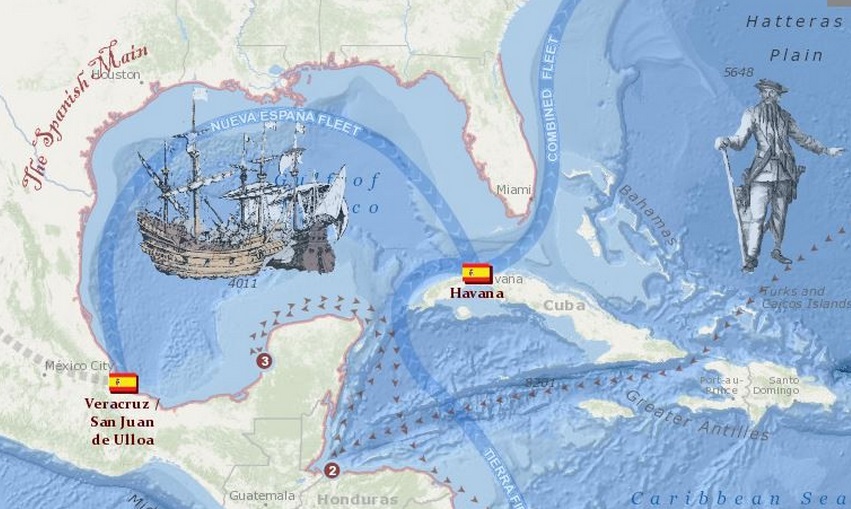
These seven maps include depictions of the voyage of the Titanic, battlefields of the civil war, decisive moments in the Battle of Gettysburg, the assassination of Abraham Lincoln, the 1906 San Francisco earthquake and fire, the voyage of Charles Darwin, and pirates of the Caribbean.  The Story Maps coordinate historic photographs, Sanborn Fire Insurance and other historic maps, biographies, historical research, and even audio and video to create a unique map tour.

Check out the ESRI Story Map Gallery to view other maps related to history, architecture and design, business, the environment, culture, disasters, and science and technology.

ESRI is also sponsoring a contest, ESRI Storytelling with Maps.  The deadline for entries is June 8.

The Ball State University Libraries’ GIS Research and Map Collection (GRMC) on the second floor of Bracken Library offers access to ESRI GIS software and online GIS tutorials, datasets, online mapping applications, in-house GIS data, and one-on-one assistance from the GIS Specialist.

For more information, please contact the GRMC at 765-285-1097 from 7:30 am to 4:30 pm Monday through Friday.

Tuesday, May 26, 2015

Cartographic Materials Available from Ball State University Libraries


Summer Reading List:  Cartography, Secret Cities, and the Power of Maps

The Ball State University Libraries provide the latest resources for research and learning.  Anyone interested in learning more about creating maps, human geography, or thematic atlases may wish to check out some of the new materials available from Bracken Library.

Unruly Places:  Lost Spaces, Secret Cities, and Other Inscrutable Geographies by Alastair Bonnett is available in the General Collection on the third floor of Bracken Library (Range 46).  This book was published in 2014 and provides a tour of the world’s hidden geographies—from no man’s lands, secret and dead cities, breakaway nations and enclaves, even the parking lot at LAX, and disappearing islands.  For example, Bonnett describes Sandy Island (reportedly off the coast of Australia), which appeared on National Geographic maps and even Google Earth up until 2012 even though it does not exist.

Mapping the Nation:  History and Cartography in Nineteenth-Century America by Susan Schulten is also available in the General Collection on the third floor of Bracken Library (Range 48).  This book provides a history of map-making in American history, including the mapping of disease, slavery, and environmental issues.  The book includes maps from the Geography and Map Division of the Library of Congress and other historic collections.

Mapping in the Cloud by Michael Peterson was published in 2014 and can also be found on the third floor of Bracken Library (Range 48).  This book includes an introduction to maps and the Internet, a map gallery, online street maps, map digitizing and GPS, map mashups, and animated mapping.  Readers can learn about the technology of modern cartography, GIS software, and Web-based mapping.  The book includes a companion Web page providing supplementary materials for instructors and students.

Maps by Aleksandra Mizielinska and Daniel Mizielinski was published in 2013.  This atlas was published for children, but the illustrations and maps (above, click to enlarge) may be interesting for teachers, artists, and other interested in unique cartography.  The maps depict geographical features and political borders, places of interest, iconic personalities, native animals and plants, and cultural events for each region of the world.  The atlas even shows popular names in different regions of the world.  The book is available in the GIS Research and Map Collection (GRMC) on the second floor of Bracken Library.

World Atlas of Birds by Peter Scott was published in 2014 and includes color portraits of 500 specially selected species, 270 line drawings, and 167 maps showing the realms of birds around the world.  The maps cover virtually every habitat from polar regions to rainforests, mountains, and even oceans.  Fourteen of the world’s most distinguished ornithologists provided information for the book.  This resource can be found in the Atlas Collection (Range 3) on the second floor of Bracken Library.

For more information about cartographic resources available from Bracken Library, please contact the GRMC at 765-285-1097.

Friday, May 22, 2015

Maps of Syria Available from Ball State University Libraries


Maps in the News:  Ancient City of Palmyra, Syria

Palmyra in Syria is the latest city to fall into the hands of the Islamic State militants.  The Ball State University Libraries’ GIS Research and Map Collection (GRMC) and Atlas Collection feature cartographic resources of Palmyra and other cities in the Middle East.

The first map was published by GeoProjects in association with Oxford University Press.  The map of the Syrian Arab Republic includes inset maps of Damascus, Aleppo, and this map of Palmyra.  The map includes a photograph of ancient Roman ruins and shows the locations of ancient tombs and basilicas, Justinian’s Wall, museums, main roads and ancient roads.

The last two maps are from The Penguin Historical Atlas of Ancient Rome available from the Atlas Collection.  The top map shows the location of the Roman frontier and empire and the Empire of Palmyra in 271 A.D. with campaigns and conquests marked.

The second map shows the city as it appeared before the city was destroyed by the Romans in 273 A.D.  “The oasis city of Palmyra in the Syrian desert became an important centre on the long-distance trade routes leading to the populous cities of the East Mediterranean.”  The most important part of the city was the great sanctuary of Bel, a large enclosed temple.

For more information about using cartographic resources from Ball State University Libraries, please contact the GRMC at 765-285-1097.

Wednesday, May 13, 2015

Indianapolis Motor Speedway Maps Exhibit at Ball State University Libraries


Indianapolis Motor Speedway:  Time-lapse in Maps Exhibit

The Ball State University Libraries’ GIS Research and Map Collection (GRMC) has created a special maps exhibit to commemorate the Indianapolis 500 race.  The exhibit, Indianapolis Motor Speedway: Time-lapse in Maps, will be featured in the front windows of the GRMC on the second floor of Bracken Library through May.

The exhibit was created by GRMC student-assistant John Renschler and features maps depicting changes in the Speedway grounds dating back to 1945.  Classic photographs from the Ralph J. Satterlee Indianapolis 500 Photographs Collection in the Libraries’ Digital Media Repository (including photographs documenting Walter Cronkite, Jimmy Stewart, Jim Nabors and other visiting celebrities) are also included.

A copy of the exhibit is available from the Libraries’ Cardinal Scholar repository is also available for research and learning.  The poster may be printed for use in the classroom or other educational projects.  The GRMC offers to members of the BSU community two large-format plotters for printing posters.

For more information about using maps in research and learning, please contact the GRMC at 765-285-1097.

Earthquake and Seismic Hazard Maps Available from Ball State University Libraries


Dynamic Planet:  Earthquake and Seismic Hazard Maps from Ball State University Libraries

The Ball State University Libraries’ GIS Research and Map Collection (GRMC) has added a set of seismic activity maps to the Digital Media Repository (DMR).  This collection, Earthquake and Seismic Hazard Maps, provides online access to a set of 14 maps depicting the locations of fault lines, historic earthquakes, active volcanoes, and plate tectonics from around the world and in the United States, including regional locations like the New Madrid fault line in the Midwest.

The Digital Media Repository allows users to access and download files for research and learning.  Once a map has been selected, click on the top right “download” button to choose a small, medium, or large file copy or print the map.  The DMR also provides metadata of publication information and dates.  Users can also order a reproduction from the archival file of the map from Archives and Special Collections at 765-285-5078.

For more information about using maps for research and learning, please contact the GRMC at 765-285-1097.

Wednesday, May 06, 2015

Free GIS Training Available May 7


Storytelling with Maps:  ESRI GIS Live Training Seminars

ESRI, the leading publisher of GIS software, is offering a free training seminar about how to create and publish story maps.  Bern Szukalski and Rupert Essinger will present “Telling Your Story with ESRI Story Maps” on May 7 at noon, 2:00, and 6:00 pm Eastern time.

From ESRI:  ESRI story maps are an exciting and popular feature of the ArcGIS platform that combine maps, photos, text, and other media, in a single interactive application. Any topic or project that includes a map can be a story map. Their engaging, easy- and fun-to-use format makes story maps especially ideal for public outreach, stakeholder engagement, and GIS project presentations. In this seminar, attendees will learn about ESRI application templates that simplify story map creation and require no coding. The presenters will discuss how to choose the best template for a project and the steps to create a compelling story map from a template.

After viewing this seminar, you will understand how to:  Access the Story Maps Gallery to find inspiration; select a suitable story map template to showcase your story; and get started using the three most popular story map application templates.

The Ball State University Libraries’ GIS Research and Map Collection (GRMC) on the second floor of Bracken Library offers access to GIS software and online GIS tutorials, datasets, online mapping applications, in-house GIS data, and one-on-one assistance from the GIS Specialist.


For more information, please contact the GRMC at 765-285-1097.

Monday, May 04, 2015

Kent State University Anniversary Map


Map of the Shootings at Kent State University:  May 4, 1970

The Ball State University Libraries provide cartographic resources for research and learning.  From Historical Atlas of the Vietnam War by Harry G. Summers, this map shows the locations of the student protest marchers at Kent State University on May 4, 1970.  The movement of National Guard troops from the ROTC building is shown in blue.  And the locations of the injured and four killed students are shown in white and red.

The atlas is available from Bracken Library for circulation for 28 days or longer.  For more information, please contact the GIS Research and Map Collection at 765-285-1097.


Thursday, April 30, 2015

Maps in the News: Kathmandu, Nepal and the Straits of Hormuz


Central Intelligence Agency Nepal population density

Durbar Square, Kathmandu

Himalayas and Mt. Everest

Central Intelligence Agency Straits of Hormuz

Central Intelligence Agency Middle East

Wednesday, April 29, 2015

Baltimore Maryland Maps Available from Ball State University Libraries


Maps in the News:  Baltimore

The Ball State University Libraries’ GIS Research and Map Collection (GRMC) has dozens of maps of Baltimore, Maryland, available for research and learning.  The collection includes nautical charts of the harbor area of Baltimore, U.S. Geological Survey historic and modern topographic maps that show the development of the city, and modern and historic street maps.

The Maryland Geological Survey published maps available from the GRMC of the topography, election districts, and geological formations of Baltimore from 1925 and 1939.  The Underground Railroad: Maryland’s Network to Freedom was published in 2010 and includes important landmarks of the Underground Railroad in Baltimore, and Baltimore: A House Divided is a map depicting the events of the Civil War in the Chesapeake Bay area.

The Washington Post published two maps showing the races of the residents of Baltimore in relation to the neighborhoods with the most vacant houses.  The racial map was published by The Cooper Center for Public Service at the University of Virginia.  The map of vacant buildings (15,928 in Baltimore) was published in 2012 by Elliott Plack.

The GRMC is located on the second floor of Bracken Library.


Vietnam War Maps from Ball State University Libraries


Mapping the Vietnam War and the Fall of Saigon

April 30, 2015 marks the 40th anniversary of the end of American involvement in the Vietnam War.  The war in which 58,000 Americans died ended with the communist forces of North Vietnam overtaking Saigon (now Ho Chi Minh City) and the collapse of the Republic of South Vietnam.

The Ball State University Libraries’ GIS Research and Map Collection (GRMC) on the second floor of Bracken Library houses current and historic maps of Vietnam, including maps depicting North and South Vietnam.  Original U.S. Army maps published during the war are also available for research and learning—Long Binh was a U.S. Army supply facility constructed near the city of Bien Hoa, about 20 miles north of Saigon.  The map above (second from top, click to enlarge) was published in 1967 and shows the location of ammunition supplies, antennas, a heliport, hospital, and recreation areas.

The Atlas Collection in Bracken Library also includes current travel, road, and topographic atlases of Vietnam and atlases describing the Vietnam War.  South Vietnam Provincial Administrative Maps was published by the Central Intelligence Agency in 1967. 

Historical Atlas of the Vietnam War by Harry Summers was published in 1995 and is a comprehensive cartographic guide detailing the war.  The atlas includes photographs, charts, and maps describing the landmark events leading up to and during the war.

The second map above is from Historical Atlas of the Vietnam War.  The red lines represent troop movements of the North Vietnamese infantry.  The blue boxes are the locations of the U.S. and allied forces around Saigon, including the Long Binh base.  The inset map, Evacuation of Saigon, shows where the North Vietnamese fired rockets into downtown Saigon on April 27, 1975, near the U.S. Embassy.

The events of the last days of the American presence in Saigon are described in the atlas:  The U.S. Embassy workers were tasked with calming the evacuees and organizing them for evacuation: 

At 3:58 A.M. on April 29, 1975, North Vietnamese rockets struck the U.S. defense attaché’ office compound at Tan Son Nhut, effectively closing the air base and ending the fixed-wing aerial evacuation of U.S. civilian workers, third-country contract employees and their dependents, and selected South Vietnamese civilians and their families underway since April 1.

On the afternoon of April 29, they began to move everyone out.  By 4:15 A.M. on April 30, 2,619 evacuees had been helifted from the Embassy.  But in a final betrayal, made all the more tragic by the fact that it was inadvertent, the lift was cancelled, and the final 420 evacuees were abandoned:  Believing that there was a bottomless pit (of evacuees), the White House had ordered a halt.  It was the Vietnam War in microcosm—good intentions but fatally flawed execution.

…The war was at an end.  But not all South Vietnamese forces heeded the call for unconditional surrender.  Many Air Force officers flew to bases in Thailand or to U.S. aircraft carriers, and 34 Navy warships sailed to the Philippines.

The GRMC created posters featuring photographs and maps detailing World War I, World War II, the Korean War, and the Vietnam War for use in classroom and other educational exhibits.  The posters are available from the University Libraries’ Cardinal Scholar repository.  The Vietnam War poster (top, above) includes photographs and maps from atlases in the collection against a backdrop of the Vietnam War Memorial. 


Maps from the GRMC may be circulated for two weeks or longer.  Atlases from the atlas collection may be circulated for 28 days or longer.  For more information, please contact the GRMC at 765-285-1097.

Wednesday, April 22, 2015

Celebrate Earth Day with Maps


Earth Justice map of hydraulic fracturing in the U.S.

U.S. Geological Survey maps showing polar ice melt

One Planet, Many People atlas maps of Lake Chad shrinking

National Geographic map of polar ice melt

NOAA model of polar ice caps

Earth Day Maps from Ball State University Libraries

The Ball State University Libraries’ GIS Research and Map Collection (GRMC) is commemorating Earth Day with a special exhibit of maps depicting environmental concerns from around the world and artistic maps showing different perspectives of the world.  The exhibit will be displayed in the front windows of the GRMC on the second floor of Bracken Library through the end of April.

The GRMC includes numerous maps showing global hotspots, including maps of endangered species, the polar ice melt, deforestation, environmental disasters, and energy resources.  The Atlas Collection on the second floor of Bracken Library also includes several atlases that are related to environmental issues.  (Click above maps to enlarge).

Maps from the GRMC may be circulated for two weeks or longer.  Atlases may be borrowed for 28 days or longer.  For more information, please contact the GRMC at 765-285-1097.